Teaching Strategies

Damon Finazzo
Vice President of Learning Research & Design
Educating a Future-Ready Generation: Relationships that Support Mathematics Learning
Published
Last updated
In this ever-changing world where technology, industries, and societies are changing at record paces, it is our job as educators to work towards preparing our students for the future. Unfortunately, the future is not the easiest thing to predict when local, national, and international societies and businesses change so often in any given year or time.
In the absence of the crystal ball, to prepare for how to look forward, we must look back at human history to determine the most fundamental and consistent relationships that have existed in the education of every society up until now. These relationships have helped us shape our current communities and will likely help us shape our future ones as well.
Six Key Relationships for Educating a Future-Ready Generation
Educating a Future-Ready Generation is a pathway paved in six key relationships:
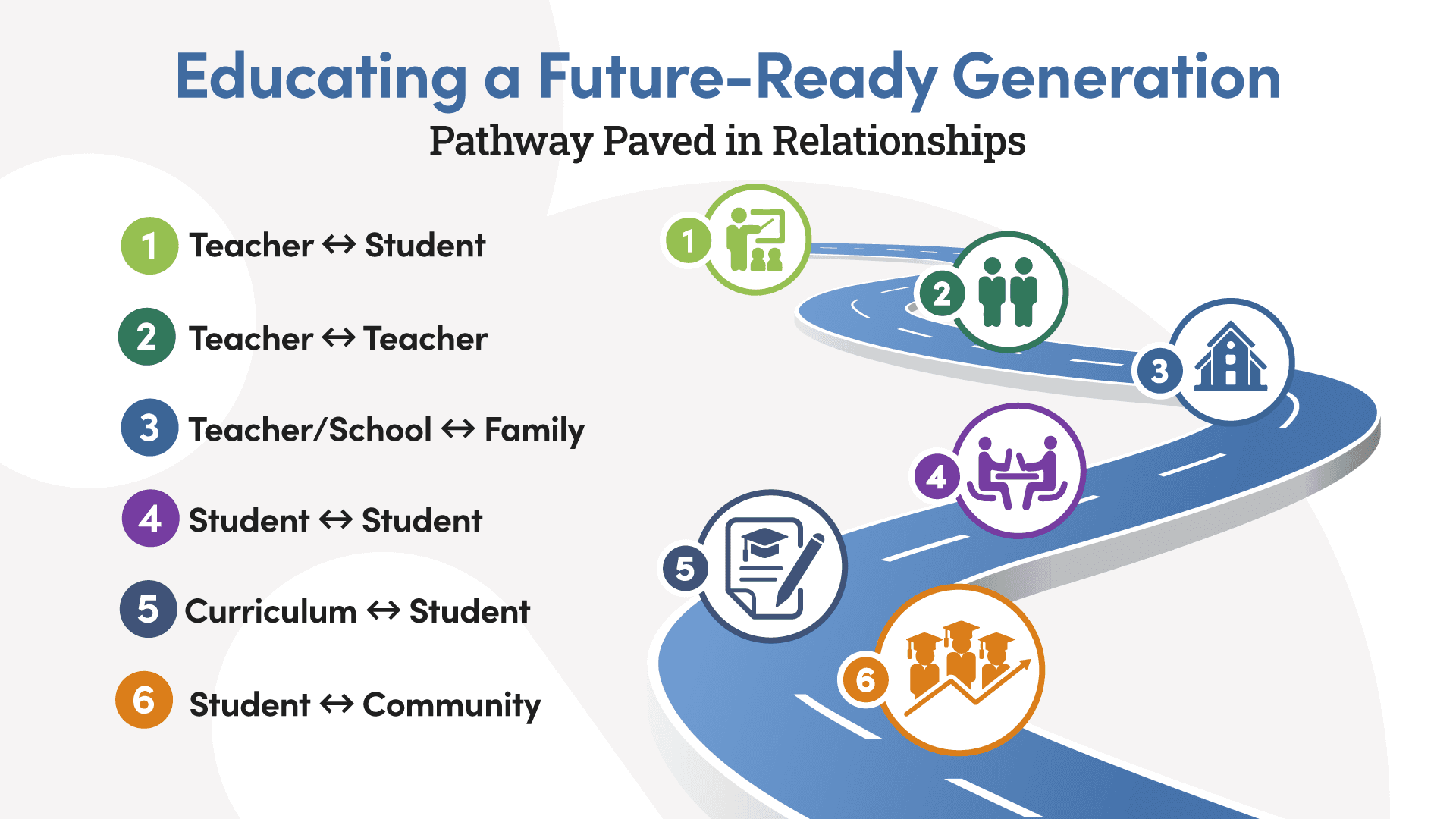
Teacher ↔ Student = How the two most important aspects of every classroom relate to one another.
Teacher ↔ Teacher = Believing that teachers cause learning¹, that cohorts of teachers must recognize this and hold each other accountable for it, and that they must share evidence of impact with one another.
Teacher/School ↔ Family = The two most influential entities in a student’s life and how they collaborate and work together.
Student ↔ Student = Do students only exist alongside one another and learn in isolation, or do they learn and grow together in ways that prepare them for meaningful collaboration and shared problem-solving as adults?
Curriculum ↔ Student = How the student perceives, engages, and interacts with the curriculum determines learning possibilities.
Student ↔ Community = True sign of a successful education experience is in how the student relates to and improves the community in the future.
It is true for our past, and it will be true for whatever is in store for us ahead…the future is paved in relationships. Before we dive into the various interpersonal relationships between learners and educators and so forth, let’s examine the relationships unfolding in mathematics education in terms of standards, strands, and mathematics proficiency and conceptual understanding.
Why Relationships Matter in Mathematics Learning
In 2000, the five NCTM Process Standards were published, helping all math teachers identify the ways students learn and express their learning.
NCTM Process Standards
Problem Solving
Reasoning & Proof
Communications
Connections
Representations
Then, in 2001, the National Academies introduced the Strands of Mathematical Proficiency as part of their “Adding It Up” report.
Strands of Mathematical Proficiency
Productive Disposition – Confident Engagement
Procedural Fluency – Calculating
Strategic Competence – Applying
Conceptual Understanding – Understanding
Adaptive Reasoning - Reasoning
While all five of these strands are essential for helping students become mathematically proficient, the power behind them is their interconnected relationships with one another. The removal or isolation of any of them make the pathway to proficiency that much more unlikely and fragile.
We also have the eight Standards for Mathematical Practice which were introduced to us in 2010. These habits of mind guide us to what all students should be doing throughout their learning of mathematics. Maureen Grady (in her NCTM article subtitled ‘Whatever Happened to Productive Disposition’)² brings attention to the fact that 4 of the 5 strands are obviously baked into the Math Practices. However, Productive Disposition seems to only get mentioned in the intro and is not obviously baked in like the others are.
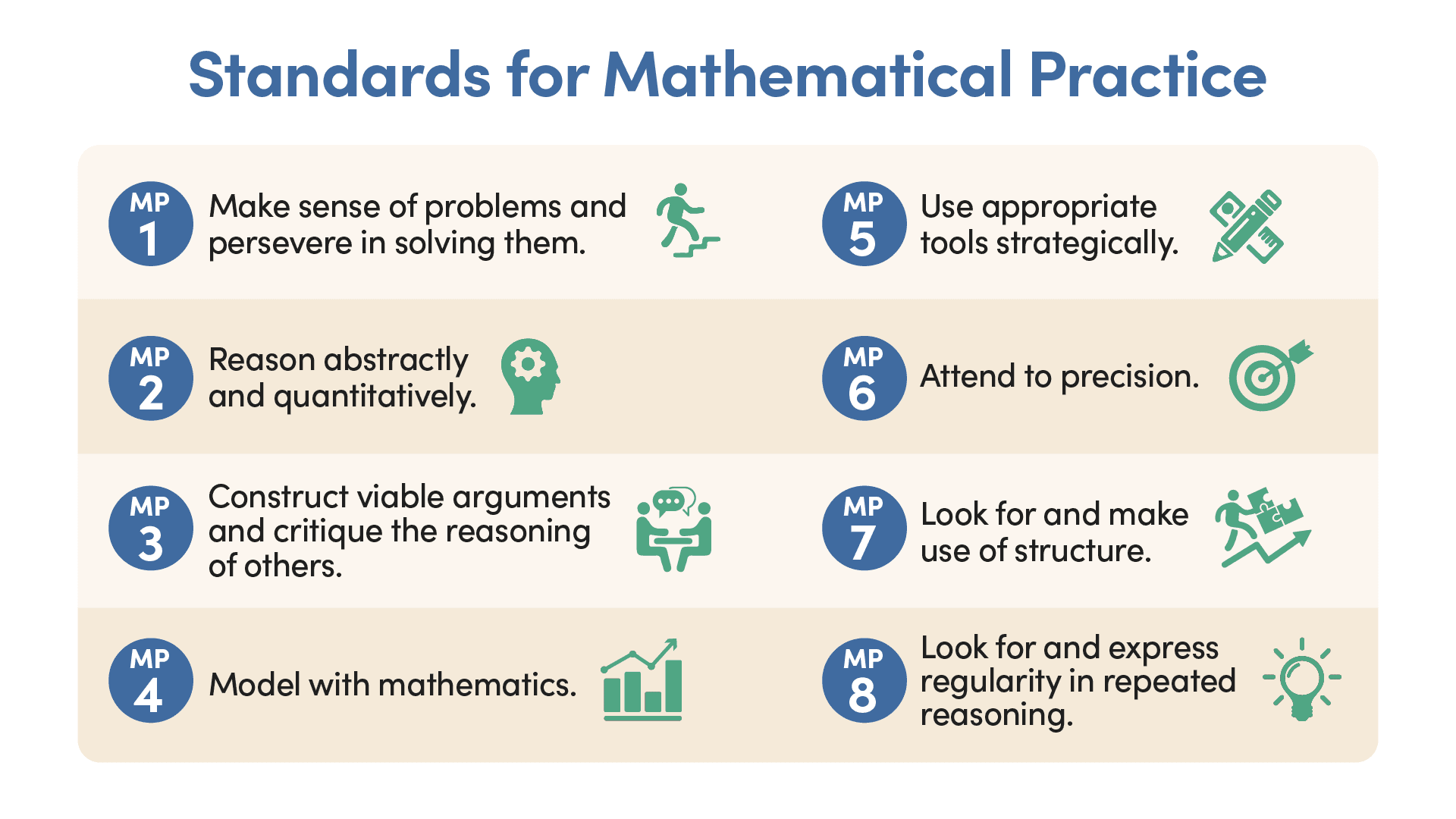
The problem I see is that we are covering mathematics really well in the Mathematical Practices, but we will never help students get to Mathematical Proficiency if we do not give equal attention to the disposition of the student in relation to the content and the practices. Remember, all five strands are necessary for the cord to be strong, and it only takes weakness in one strand to cause weakness in the entire cord.
In the next post in this series, we’ll take a closer look at the teacher-student relationship and examine how opportunity and environment, along with certain instructional practices positively impact and shape students’ productive disposition and confidence in learning mathematics.
Meet the Expert

Damon Finazzo, M.Ed. is the Vice President of Learning Research & Design at Big Ideas Learning and is an education leader who has served in a variety of roles over the past 24 years, some of which include elementary school teacher, PreK-8 principal, and president of a PreK-8 Catholic school system.
He holds instructional (K-6) and administrative (N-12) credentials from the Virginia and Pennsylvania Departments of Education, and a Master’s of Education in School Leadership and Supervision (N-12) from Virginia Commonwealth University.
Damon’s experiences in working in PK-12 schools and educational publishing for PK-16 mathematics has proven him to be a collaborative, thoughtful, and compassionate leader focused on teachers, students, and community with an educational philosophy grounded in three fundamental principles: belief, motivation, and service.
References
Donohoo, J., Hattie, J., & Eells, R. (2018). The power of collective efficacy. Educational Leadership, 75(6), 40–44. http://www.ascd.org/publications/educational-leadership/mar18/vol75/num06/The-Power-of-CollectiveEfficacy.aspx
Grady, Maureen. “Mathematics Teaching in the Middle School: Whatever Happened to Productive Disposition”. The National Council of Teachers of Mathematics (May 2016). Vol. 21 No. 9.